Siddhi Jangade
Work
Resume

Augmented Maintenance
Scaling expert maintenance knowledge to thousands of construction field engineers while preserving human judgment and decision quality.
Team
2 UX Designers (including me)
1 Manager
Timeline
May - July 2026
3 months
Impact
12% reduction in project costs
28% reduction in downtime
CLIENTS





SCENARIO ON-GROUND
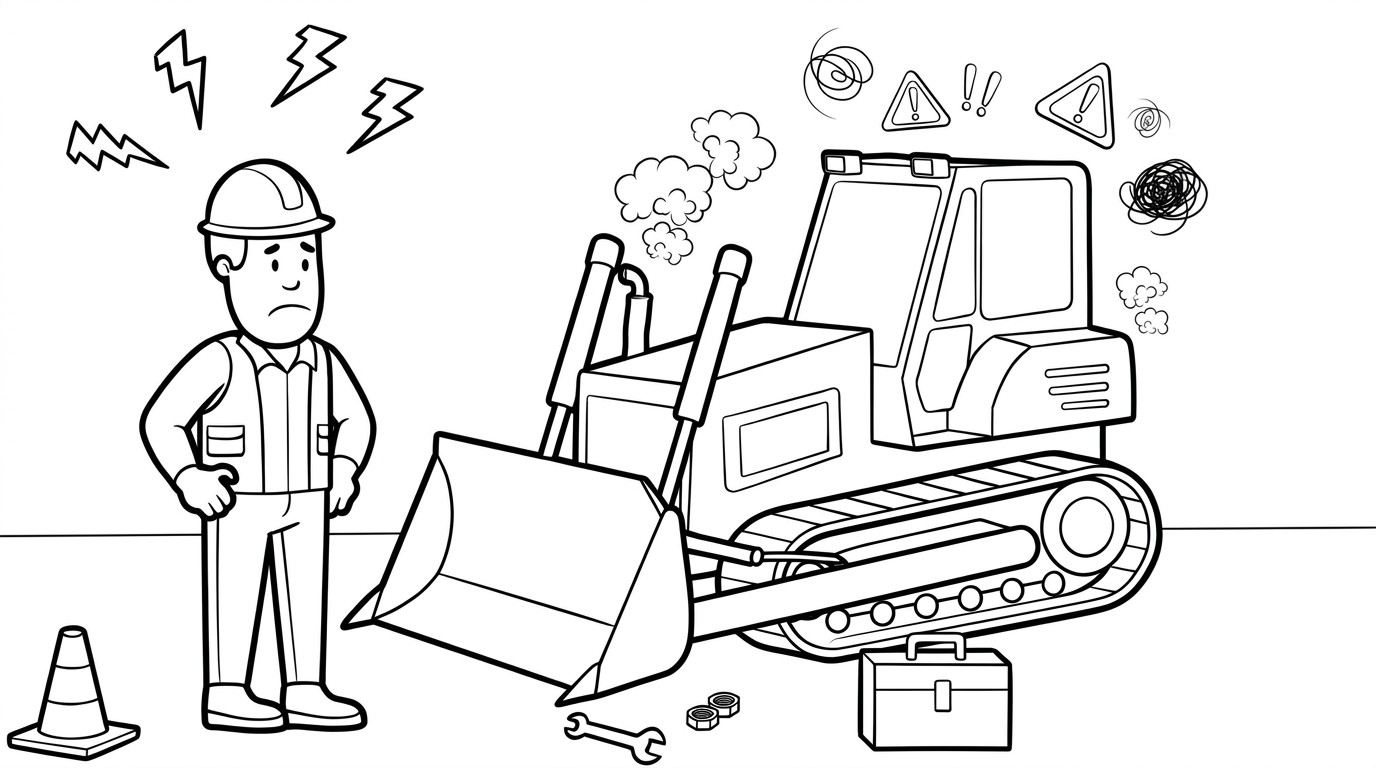
A bulldozer breaks down. The clock is ticking. Costs are rising.
What happens next?
THE PROBLEM
Field engineers at construction sites face significant challenges diagnosing and resolving equipment failures efficiently in
remote construction environments.
SOLUTION OVERVIEW
An offline-first App for Android
AI-Assisted Equipment Diagnosis for Field Engineers.
HUMAN-IN-THE-LOOP
Context Override
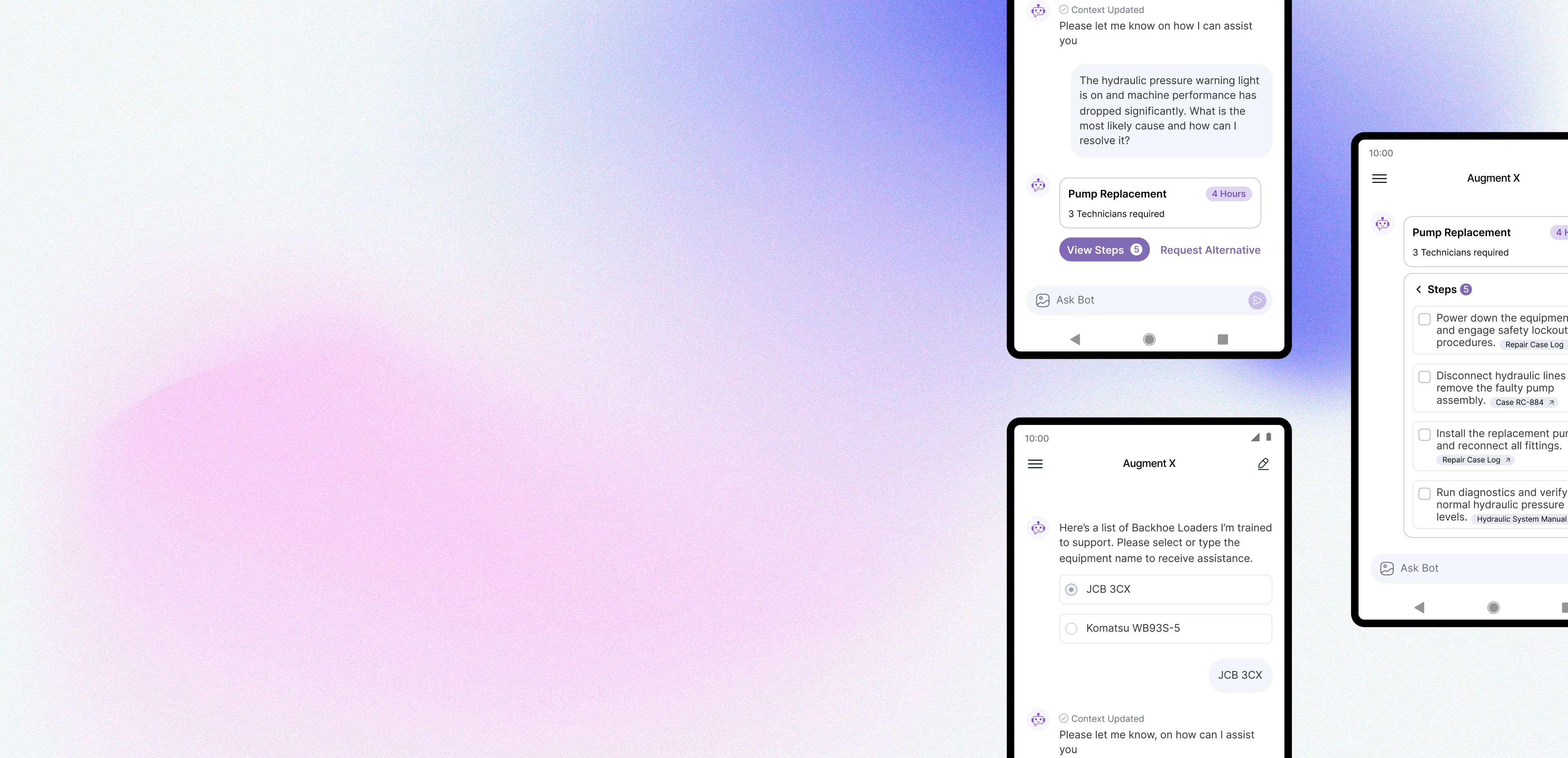
A collaborative workflow where AI provides technical expertise and engineers contribute operational context to arrive at better maintenance decisions.
TRUST
Source Verification
Surfacing supporting sources and documentation alongside AI recommendations, allowing engineers to verify where information originated before taking action.
DEEP DIVE
Why this matters
The scale and impact of this challenge made it a problem worth solving.
11%
of every dollar
on projects is wasted, due to poor project performance.
66%
of organisations
miss their project targets due to delivery breakdowns.
9 of 10
Construction Projects
have cost overruns, regularly up to 50%.
RESEARCH INSIGHTS
From ambiguity to Clarity
Through stakeholder interviews, user research (conducted by the user research team) and business requirements document analysis, I broke down the problem into 3 concrete challenges:
🚧
Downtime Is Expensive
Every additional minute spent diagnosing equipment issues can delay projects, reduce equipment availability, increase maintenance costs, and impact overall operational efficiency.

Implication: Speed is critical
👷🏻
Expertise Isn't Always On-Site
Complex equipment failures often require specialist knowledge, but experienced technicians aren't always available at remote construction sites when critical decisions need to be made.
Implication: Expertise must be scalable
📚
Knowledge Is Fragmented
Troubleshooting information is scattered across manuals, service records, historical repair cases, and technical documentation, making it difficult to quickly find the right answer under pressure.
Implication: Information must be centralized
FRAMING THE OPPORTUNITY
How might we help field engineers diagnose equipment failures faster and make confident maintenance decisions, regardless of location?
AI OPPORTUNITY
Why AI?
Delivering reliable maintenance assistance required capabilities beyond those of traditional software.
SLM (small language model)
Enables fast, on-device AI assistance, even when offline.
Knowledge Graphs
Connects equipment, faults, and repair knowledge into an intelligent network.
Embedding Models
Retrieves the most relevant information based on meaning, not keywords.
REALITY CHECK
A pump replacement suggestion may be technically correct, yet unsafe to perform if overnight rain has left the site muddy and unstable.
Only a human can provide that context.
THE CONTEXT GAP
Where AI falls short
Human Judgement & Context
"That sounds technically right... but my situation isn't that simple."
AI possesses technical knowledge, but engineers hold critical operational context that influence maintenance decisions.
Trust & Explainability
"If this is wrong, I'm the one who’ll have to answer for it."
Recommendations need to be transparent and verifiable before engineers can confidently act on them in high-stakes situations.
SOLUTION OVERVIEW
An offline-first App for Android
AI-Assisted Equipment Diagnosis for Field Engineers.
HUMAN-IN-THE-LOOP
Context Override
A collaborative workflow where AI provides technical expertise and engineers contribute operational context to arrive at better maintenance decisions.
TRUST
Source Verification
Surfacing supporting sources and documentation alongside AI recommendations, allowing engineers to verify where information originated before taking action.
IMPACT
Measuring Success
Designed at Accenture for industrial clients including Samsung, LG, Siemens, Hitachi, Alstom, and Bosch, the MVP was evaluated against operational and business outcomes. The following metrics summarize its impact.
28%
Reduction in Equipment Downtime
Less time spent waiting on equipment repairs, helping construction activities resume sooner.
12%
Reduction in Maintenance Costs
More efficient diagnosis and repair decisions helped reduce unnecessary maintenance expenditure.
20%
Faster Project Delivery
Quicker maintenance decisions contributed to improved project timelines and overall delivery efficiency.
Impact metrics were based on operational KPIs tracked by the Business Analysis team across enterprise client engagements.
REFLECTION
Things I Learnt along the way
Leading a project means designing people, not just products.
AI shouldn't replace expertise. It should amplify it.
Great AI UX starts with system constraints, not screens.
Thanks for reading!
More projects
Web
AI
Crypto
UX Design
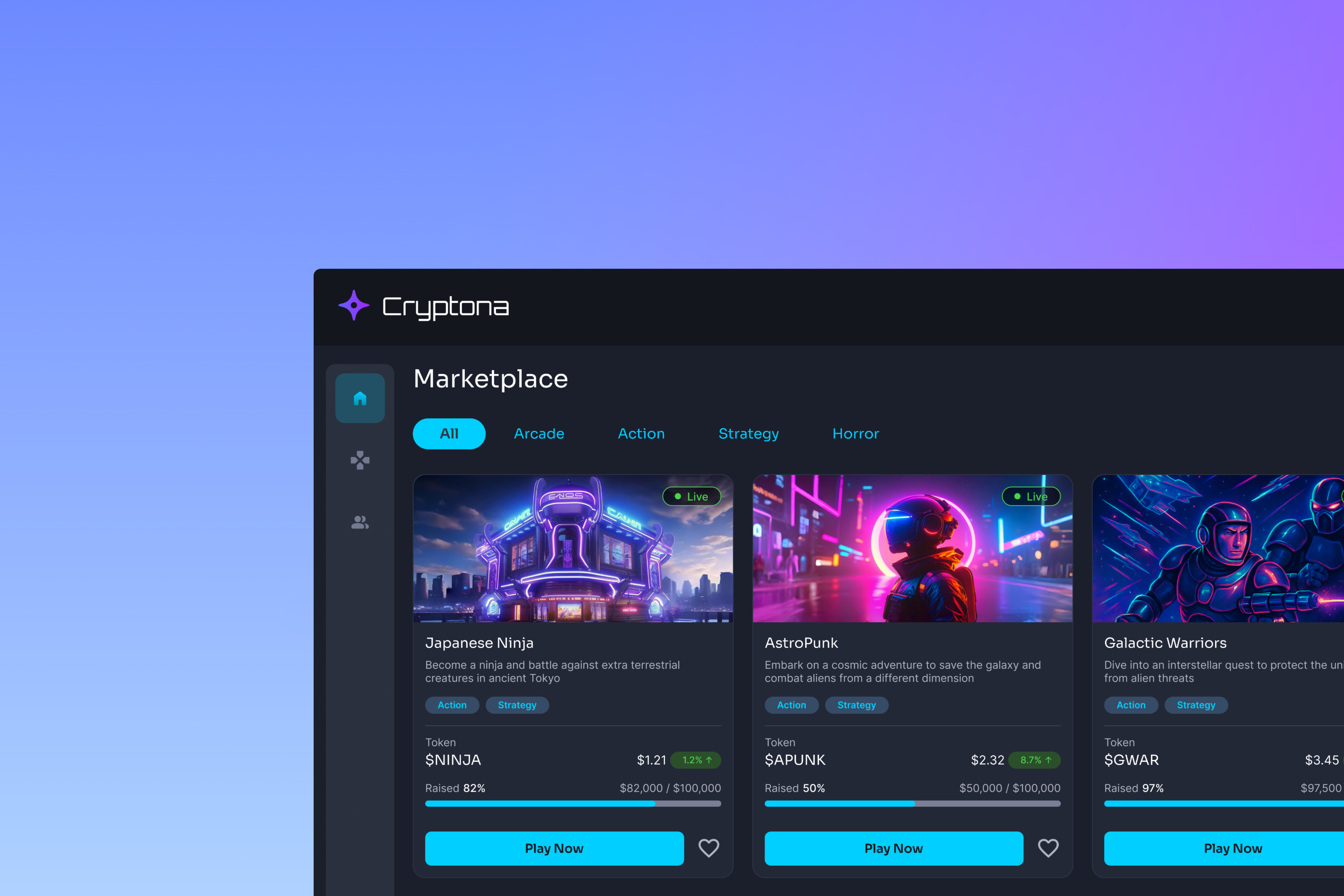
Enabling New Users to Create AI-Powered Crypto Games by Reducing Learning Curve
June - July 2025
Potential to improve onboarding completion rate by 30% as compared to industry average.
View Case Study
Augmented Maintenance
Scaling expert maintenance knowledge to thousands of construction field engineers while preserving human judgment and decision quality.
Team
2 UX Designers (including me)
1 Manager
Timeline
May - July 2026
3 months
Impact
12% reduction in project costs
28% reduction in downtime
CLIENTS
SCENARIO ON-GROUND
A bulldozer breaks down. The clock is ticking. Costs are rising.
What happens next?
THE PROBLEM
Field engineers at construction sites face significant challenges diagnosing and resolving equipment failures efficiently in
remote construction environments.
SOLUTION OVERVIEW
An offline-first App for Android
AI-Assisted Equipment Diagnosis for Field Engineers.
HUMAN-IN-THE-LOOP
Context Override
A collaborative workflow where AI provides technical expertise and engineers contribute operational context to arrive at better maintenance decisions.
TRUST
Source Verification
Surfacing supporting sources and documentation alongside AI recommendations, allowing engineers to verify where information originated before taking action.
DEEP DIVE
Why this matters
The scale and impact of this challenge made it a problem worth solving.
11%
of every dollar
on projects is wasted, due to poor project performance.
66%
of organisations
miss their project targets due to delivery breakdowns.
9 of 10
Construction Projects
have cost overruns, regularly up to 50%.
RESEARCH INSIGHTS
From ambiguity to Clarity
Through stakeholder interviews, user research (conducted by the user research team) and business requirements document analysis, I broke down the problem into 3 concrete challenges:
🚧
Downtime Is Expensive
Every additional minute spent diagnosing equipment issues can delay projects, reduce equipment availability, increase maintenance costs, and impact overall operational efficiency.
Implication: Speed is critical
👷🏻
Expertise Isn't Always On-Site
Complex equipment failures often require specialist knowledge, but experienced technicians aren't always available at remote construction sites when critical decisions need to be made.
Implication: Expertise must be scalable
📚
Knowledge Is Fragmented
Troubleshooting information is scattered across manuals, service records, historical repair cases, and technical documentation, making it difficult to quickly find the right answer under pressure.
Implication: Information must be centralized
FRAMING THE OPPORTUNITY
How might we help field engineers diagnose equipment failures faster and make confident maintenance decisions, regardless of location?
AI OPPORTUNITY
Why AI?
Delivering reliable maintenance assistance required capabilities beyond those of traditional software.
SLM (small language model)
Enables fast, on-device AI assistance, even when offline.
Knowledge Graphs
Connects equipment, faults, and repair knowledge into an intelligent network.
Embedding Models
Retrieves the most relevant information based on meaning, not keywords.
REALITY CHECK
A pump replacement suggestion may be technically correct, yet unsafe to perform if overnight rain has left the site muddy and unstable.
Only a human can provide that context.
THE CONTEXT GAP
Where AI falls short
Human Judgement & Context
"That sounds technically right... but my situation isn't that simple."
AI possesses technical knowledge, but engineers hold critical operational context that influence maintenance decisions.
Trust & Explainability
"If this is wrong, I'm the one who’ll have to answer for it."
Recommendations need to be transparent and verifiable before engineers can confidently act on them in high-stakes situations.
SOLUTION OVERVIEW
An offline-first App for Android
AI-Assisted Equipment Diagnosis for Field Engineers.
HUMAN-IN-THE-LOOP
Context Override
A collaborative workflow where AI provides technical expertise and engineers contribute operational context to arrive at better maintenance decisions.
TRUST
Source Verification
Surfacing supporting sources and documentation alongside AI recommendations, allowing engineers to verify where information originated before taking action.
IMPACT
Measuring Success
Designed at Accenture for industrial clients including Samsung, LG, Siemens, Hitachi, Alstom, and Bosch, the MVP was evaluated against operational and business outcomes. The following metrics summarize its impact.
28%
Reduction in Equipment Downtime
Less time spent waiting on equipment repairs, helping construction activities resume sooner.
12%
Reduction in Maintenance Costs
More efficient diagnosis and repair decisions helped reduce unnecessary maintenance expenditure.
20%
Faster Project Delivery
Quicker maintenance decisions contributed to improved project timelines and overall delivery efficiency.
Impact metrics were based on operational KPIs tracked by the Business Analysis team across enterprise client engagements.
REFLECTION
Things I Learnt along the way
Leading a project means designing people, not just products.
AI shouldn't replace expertise. It should amplify it.
Great AI UX starts with system constraints, not screens.
Thanks for reading!
More projects
Web
AI
Crypto
UX Design
Enabling New Users to Create AI-Powered Crypto Games by Reducing Learning Curve
June - July 2025
Potential to improve onboarding completion rate by 30% as compared to industry average.
View Case Study
Augmented Maintenance
Scaling expert maintenance knowledge to thousands of construction field engineers while preserving human judgment and decision quality.
Team
2 UX Designers (including me)
1 Manager
Timeline
May - July 2026
3 months
Impact
12% reduction in project costs
28% reduction in downtime
CLIENTS
SCENARIO ON-GROUND
A bulldozer breaks down. The clock is ticking. Costs are rising.
What happens next?
THE PROBLEM
Field engineers at construction sites face significant challenges diagnosing and resolving equipment failures efficiently in
remote construction environments.
SOLUTION OVERVIEW
An offline-first App for Android
AI-Assisted Equipment Diagnosis for Field Engineers.
HUMAN-IN-THE-LOOP
Context Override
A collaborative workflow where AI provides technical expertise and engineers contribute operational context to arrive at better maintenance decisions.
TRUST
Source Verification
Surfacing supporting sources and documentation alongside AI recommendations, allowing engineers to verify where information originated before taking action.
DEEP DIVE
Why this matters
The scale and impact of this challenge made it a problem worth solving.
11%
of every dollar
on projects is wasted, due to poor project performance.
66%
of organisations
miss their project targets due to delivery breakdowns.
9 of 10
Construction Projects
have cost overruns, regularly up to 50%.
RESEARCH INSIGHTS
From ambiguity to Clarity
Through stakeholder interviews, user research (conducted by the user research team) and business requirements document analysis, I broke down the problem into 3 concrete challenges:
🚧
Downtime Is Expensive
Every additional minute spent diagnosing equipment issues can delay projects, reduce equipment availability, increase maintenance costs, and impact overall operational efficiency.

Implication: Speed is critical
👷🏻
Expertise Isn't Always On-Site
Complex equipment failures often require specialist knowledge, but experienced technicians aren't always available at remote construction sites when critical decisions need to be made.
Implication: Expertise must be scalable
📚
Knowledge Is Fragmented
Troubleshooting information is scattered across manuals, service records, historical repair cases, and technical documentation, making it difficult to quickly find the right answer under pressure.
Implication: Information must be centralized
FRAMING THE OPPORTUNITY
How might we help field engineers diagnose equipment failures faster and make confident maintenance decisions, regardless of location?
AI OPPORTUNITY
Why AI?
Delivering reliable maintenance assistance required capabilities beyond those of traditional software.
SLM (small language model)
Enables fast, on-device AI assistance, even when offline.

Knowledge Graphs
Connects equipment, faults, and repair knowledge into an intelligent network.
Embedding Models
Retrieves the most relevant information based on meaning, not keywords.

REALITY CHECK
A pump replacement suggestion may be technically correct, yet unsafe to perform if overnight rain has left the site muddy and unstable.
Only a human can provide that context.
THE CONTEXT GAP
Where AI falls short
Human Judgement & Context
"That sounds technically right... but my situation isn't that simple."
AI possesses technical knowledge, but engineers hold critical operational context that influence maintenance decisions.
Trust & Explainability
"If this is wrong, I'm the one who’ll have to answer for it."
Recommendations need to be transparent and verifiable before engineers can confidently act on them in high-stakes situations.
SOLUTION OVERVIEW
An offline-first App for Android
AI-Assisted Equipment Diagnosis for Field Engineers.
HUMAN-IN-THE-LOOP
Context Override
A collaborative workflow where AI provides technical expertise and engineers contribute operational context to arrive at better maintenance decisions.
TRUST
Source Verification
Surfacing supporting sources and documentation alongside AI recommendations, allowing engineers to verify where information originated before taking action.
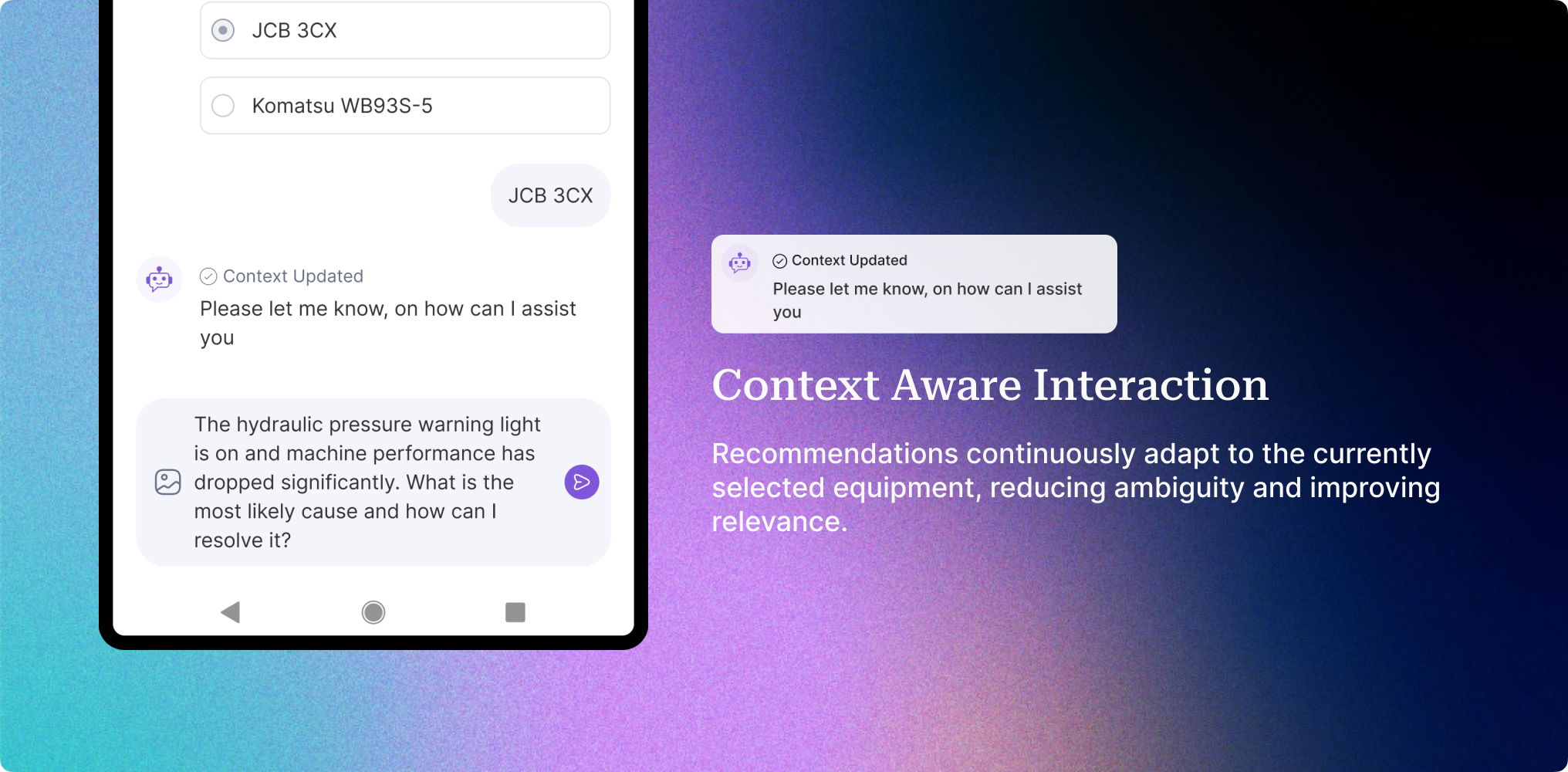
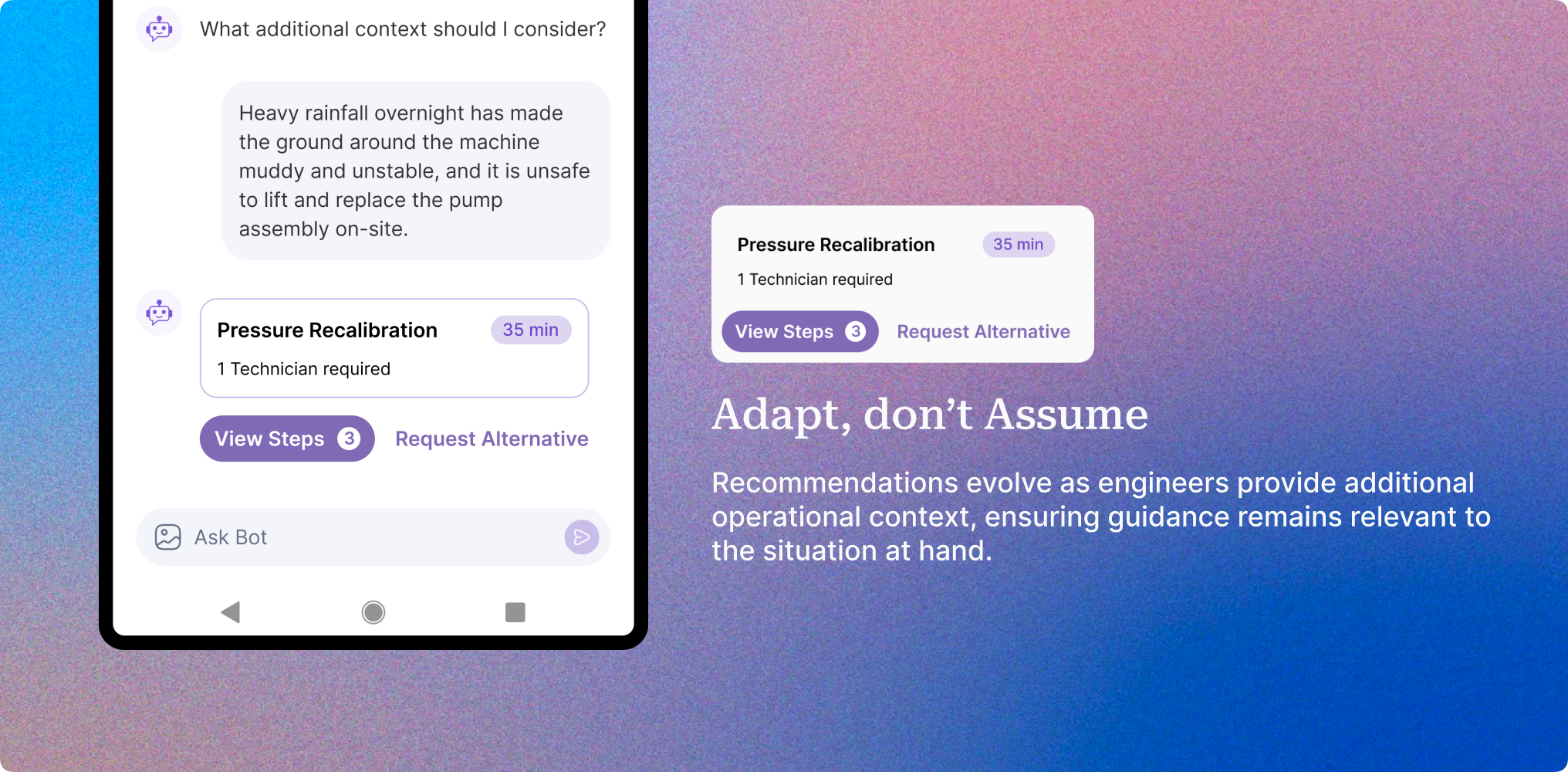
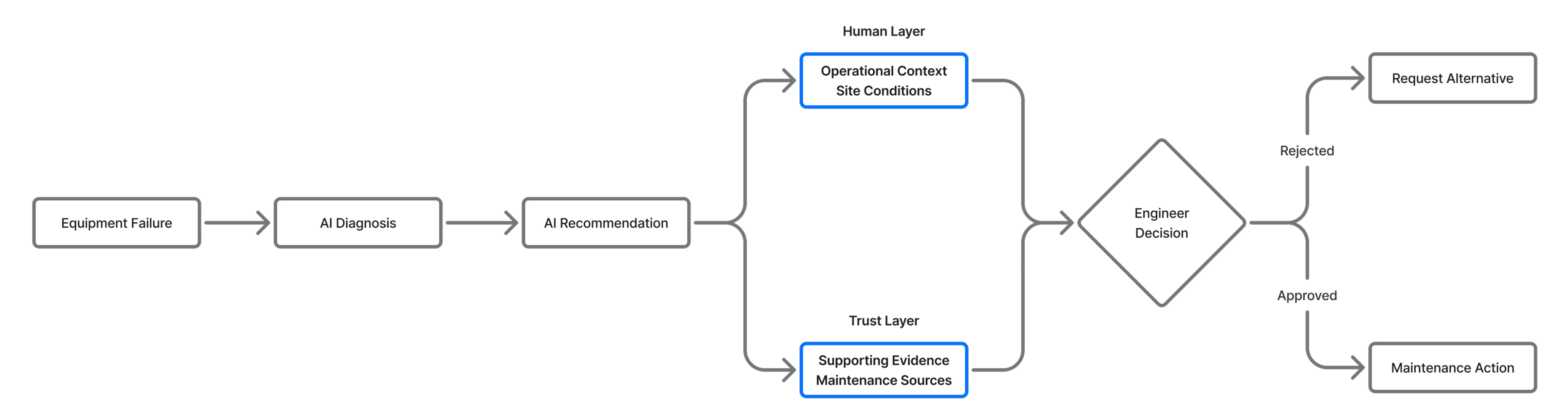
DECISIONS & ARTEFACTS
The Whys & Whats


IMPACT
Measuring Success
Designed at Accenture for industrial clients including Samsung, LG, Siemens, Hitachi, Alstom, and Bosch, the MVP was evaluated against operational and business outcomes. The following metrics summarize its impact.
28%
Reduction in Equipment Downtime
Less time spent waiting on equipment repairs, helping construction activities resume sooner.
12%
Reduction in Maintenance Costs
More efficient diagnosis and repair decisions helped reduce unnecessary maintenance expenditure.
20%
Faster Project Delivery
Quicker maintenance decisions contributed to improved project timelines and overall delivery efficiency.
Impact metrics were based on operational KPIs tracked by the Business Analysis team across enterprise client engagements.
REFLECTION
Things I Learnt along the way
Leading a project means designing people, not just products.
AI shouldn't replace expertise. It should amplify it.
Great AI UX starts with system constraints, not screens.
Thanks for reading!
More projects
Web
AI
Crypto
UX Design
Enabling New Users to Create AI-Powered Crypto Games by Reducing Learning Curve
June - July 2025
Potential to improve onboarding completion rate by 30% as compared to industry average.
View Case Study
© Siddhi Jangade 2026. All Rights Reserved.